Where People Go Wrong
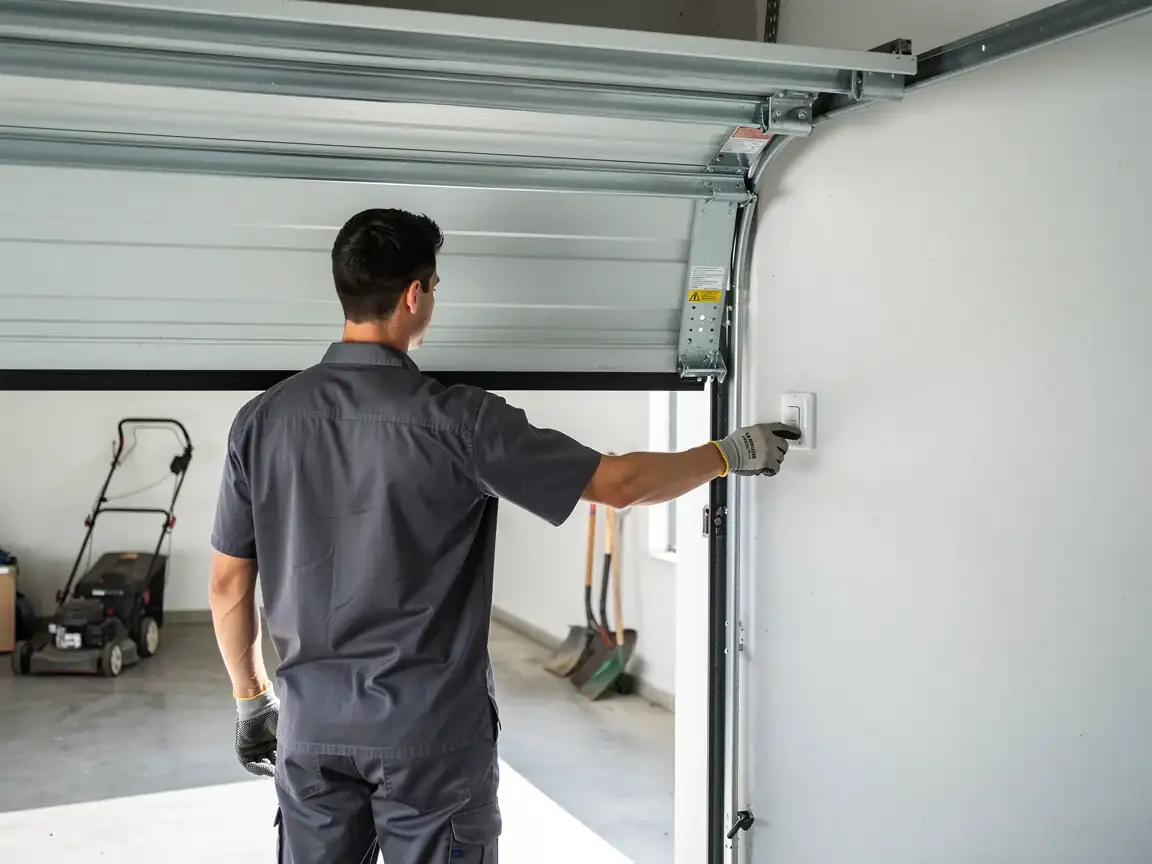
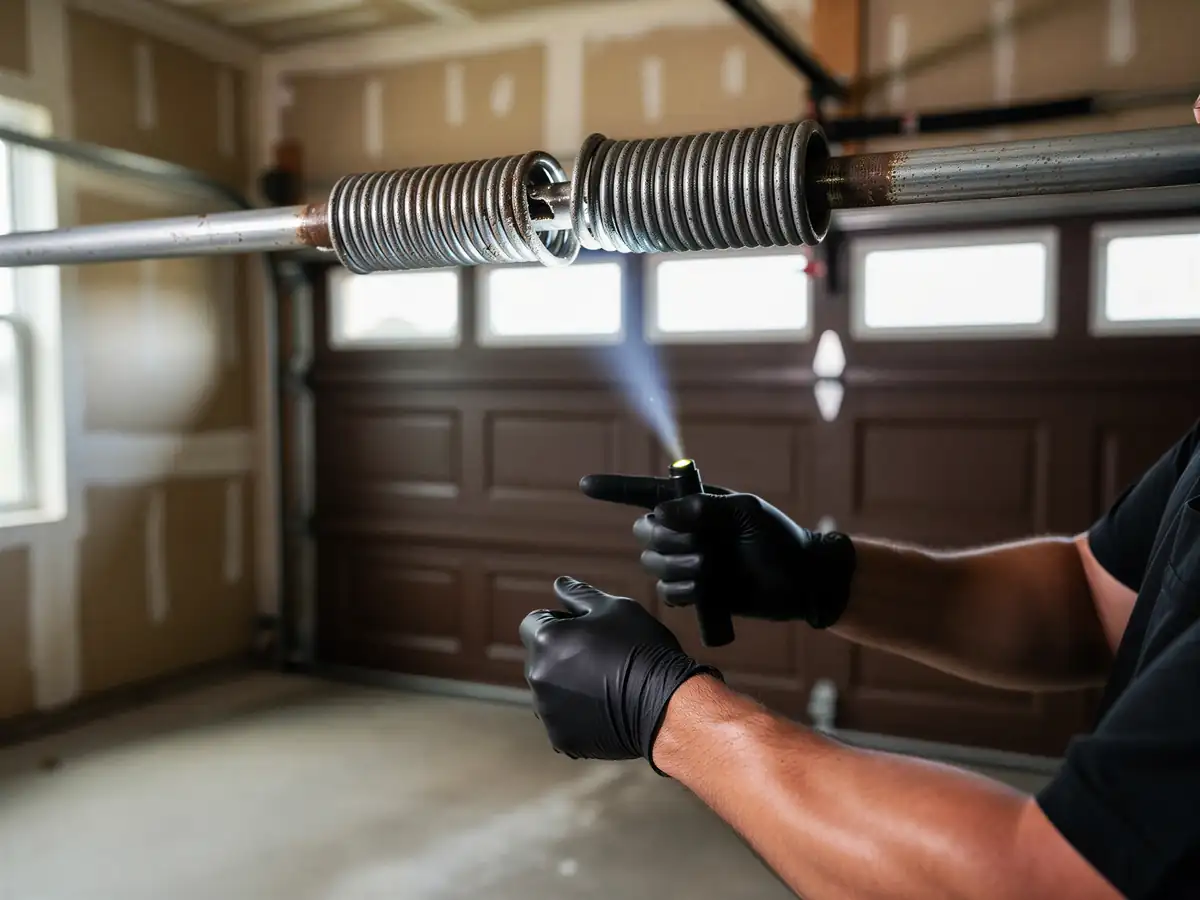
The mistake we see most often here: someone hears a new sound, sprays WD-40 on the track, and calls it fixed. That buys a week, maybe two. It doesn't tell you anything about why the sound started.
Most of the housing in this part of town went up between 1947 and 2012, with the median build year sitting at 1963, and a lot of it clustered in that 1960s-to-70s wave that covers roughly twenty named areas around here. That matters because a door on a 1963 house has usually been through at least one opener swap, maybe two spring replacements, and whoever did that work may not have matched the hardware to the original track gauge. The noise you hear today might be original rollers finally done, or it might be a mismatch from a repair done decades ago.
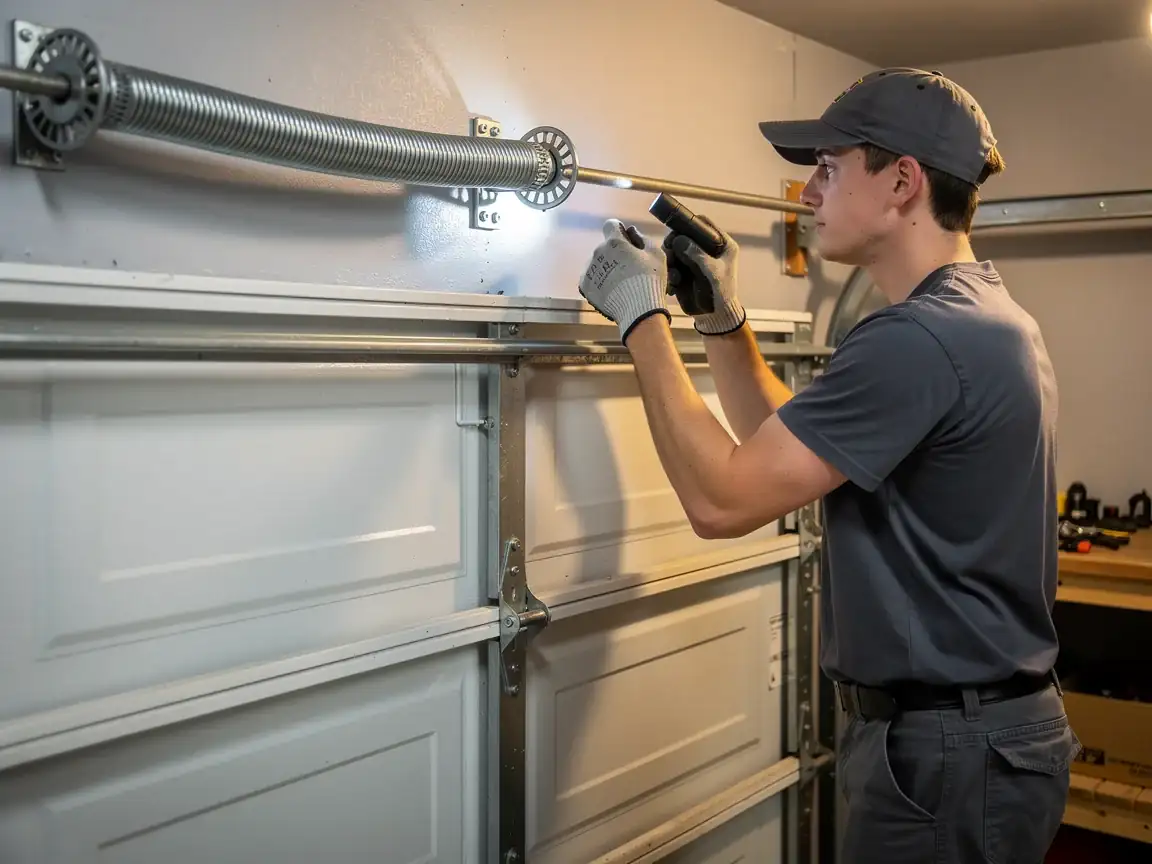
People also assume a loud door means a dangerous door, or a quiet door means a safe one. Neither is reliable. A torsion spring can be two turns from snapping and barely make a sound. A door can squeal like a gate hinge and still have years left in the rollers. The sound tells you where to look, not how urgent it is - you still have to look.
Season by Season
We're in a mild temperate band here
And that changes the whole conversation compared to places with real winters or real summers. You're not getting the freeze-thaw cycle that cracks panels, and you're not getting the summer heat spike that makes steel tracks expand enough to bind. Most of the seasonal noise complaints elsewhere in the country just don't apply the same way in Hermosa Beach.
What you do get is a steadier, year-round wear pattern
Lubricant on rollers and hinges doesn't gum up from heat or go brittle from cold the way it does in harsher climates, so when a door starts making noise here, it's rarely the weather doing it. It's almost always cycle count - how many times the door has opened and closed - or age of the specific part, not the season.
That's actually good news for diagnosis
If your door suddenly gets noisy in January and quiet again by March, something mechanical shifted, not the temperature. In a mild climate like this one, weather is mostly off the list of suspects, which narrows things down faster than it would somewhere with real seasonal swings.
The Situation
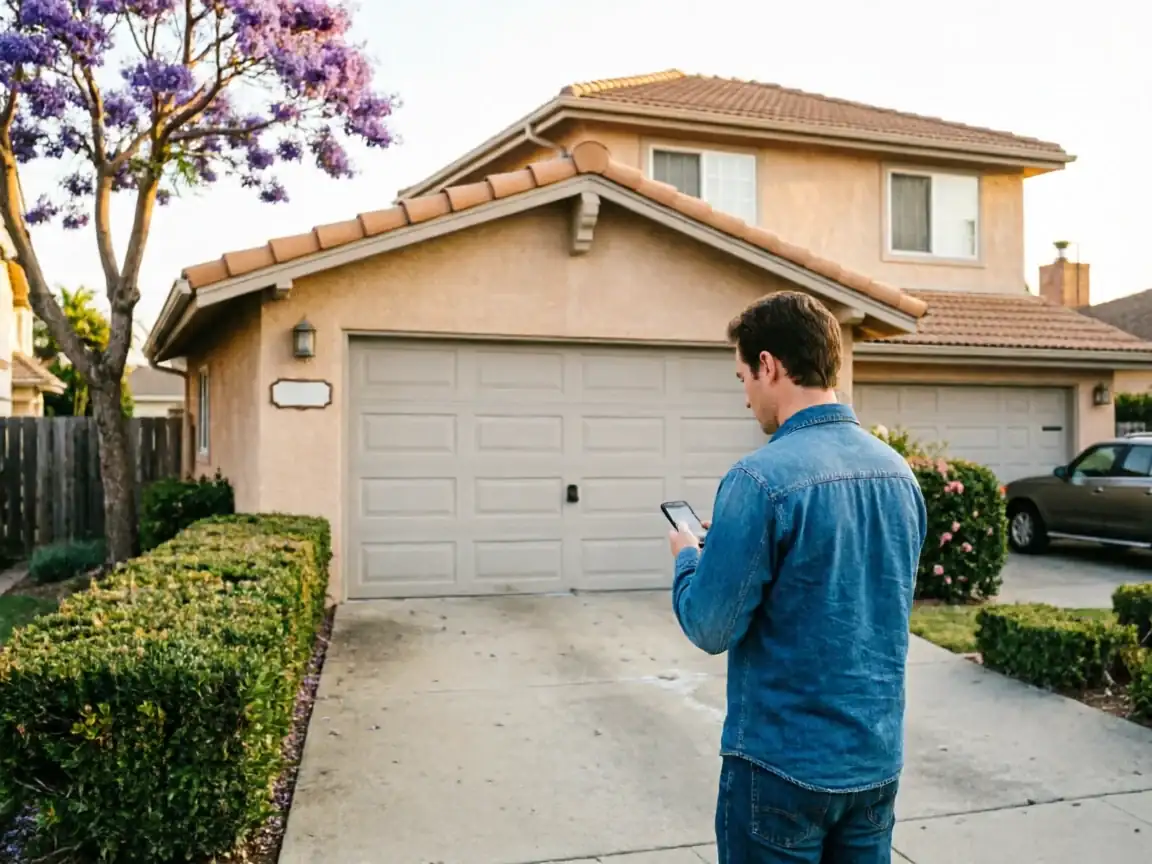
Hermosa Beach sits close to several neighboring communities - El Segundo about 3 miles off just 2 miles east, Palos Verdes Estates roughly 7 miles out - and the housing stock across this whole stretch tends to follow the same build pattern: a wide spread from 1947 to 2012, with the bulk of it from the 1960s and 70s.
Across the broader service area there are 86,713 households, with 32,463 of those owner-occupied houses - the kind of place where a garage door isn't a rental amenity, it's something the owner has lived with for years and knows the sounds of. Median household income in the area runs around $100,007, which tends to mean people lean toward fixing a known part rather than guessing, once they know what's actually wrong.
What this means for noise complaints specifically: a big share of the doors we look at are original or near-original to a house built decades before current hardware standards. The spring size, the track width, even the drum - all of it was spec'd for a different era of door weight and opener torque. A noise that would be nothing on a 2015 door can mean something different on a 1963 one.
What Local Conditions Do
In a mild climate, the usual weather-driven explanations don't carry much weight, so when we're asked to track down a noise, we're looking almost entirely at mechanical cause: roller wear, spring fatigue from cycle count, hinge wear, or hardware that was never matched to the door's actual weight in the first place.
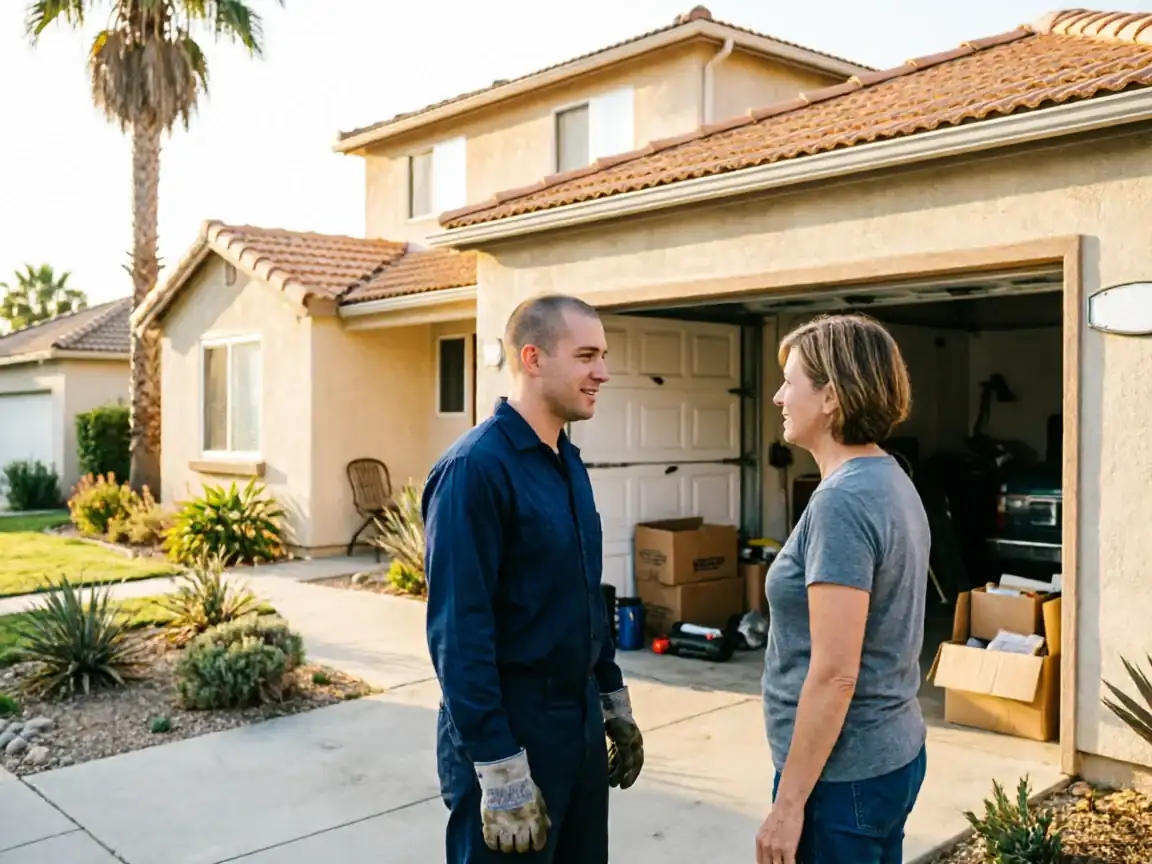
One honest limit here: we can't always diagnose a noise over the phone, and we won't pretend to. A grinding sound could be a roller or it could be a bearing at the end of the torsion shaft, and those two fixes are not the same cost or the same urgency. If you tell us the door is making noise, the first real answer we can give you is after someone's hands are on it.
Given how much of the stock in this area dates to the 1960s and 70s, we spend a fair amount of time matching modern rollers and springs to older track and header setups rather than doing a straight swap. That's slower than a generic repair, but it's the difference between a door that's quiet for a year and one that's quiet for a decade.