Stocked Parts
The fault we see most in Rossmoor isn't a dead motor - it's an opener that still works but has no safety-reversal sensors, because the house it's bolted to predates the 1993 federal rule requiring them. With a median build year of 1959 here, a lot of garages are on their second or third opener since the house went up, and none of those swaps necessarily brought the bracket spacing, header clearance, or wiring up to what a modern unit expects.
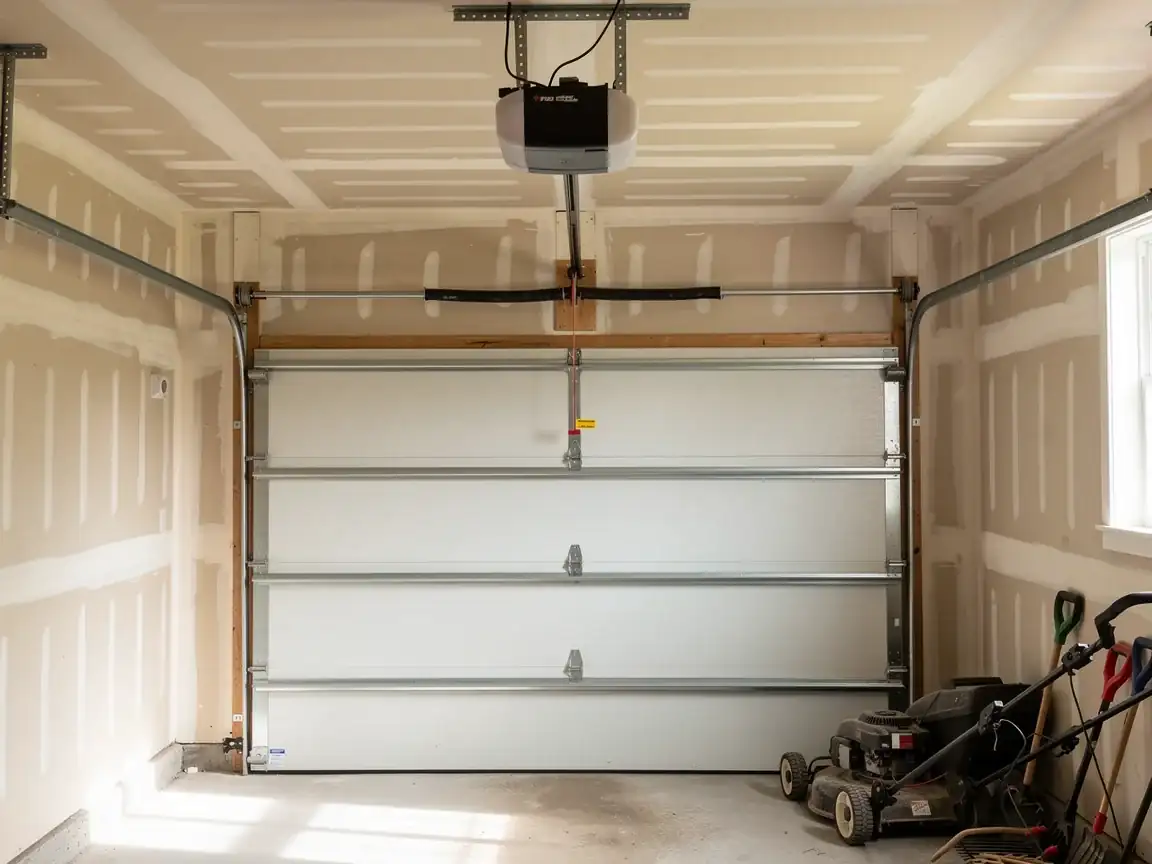
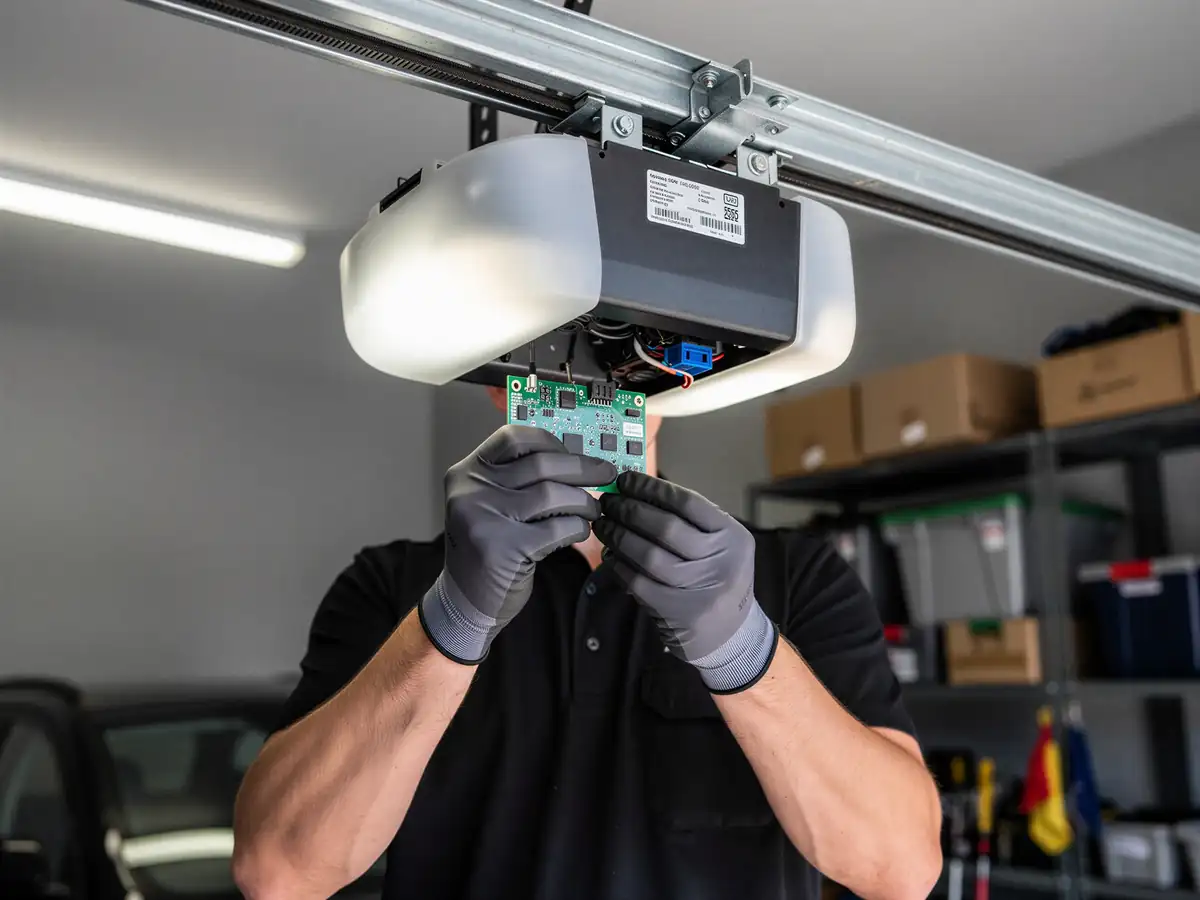
We carry belt-drive and chain-drive openers in the truck, along with the sensor eyes, mounting brackets, and header extension kits that older framing usually needs. What we don't carry is anything unusual - this isn't a parts problem, it's a wiring and clearance problem. Houses from this era often have a single ungrounded outlet near the door opening, installed for a light bulb, not a 3/4-horsepower motor. We'll tell you up front if that outlet needs attention before we hang anything, rather than running a new opener off a connection that isn't rated for it.
Time on the Job
We run this job out of Hermosa Beach
And Rossmoor sits about 20 miles out, so we book these as a planned appointment rather than a same-day add-on. Once we're on site, a straight swap - same mounting points, existing wiring in decent shape - is a different job than one where we're adding a header bracket or running new circuit wiring because the garage still has what it had in 1959.
- 20 miles
We'll look at the header, the existing outlet, and the rail clearance before we quote a time
Not after. On a lot of these houses the ceiling framing is lower than what current openers are designed around, and that extra twenty minutes of bracket work is worth knowing about before we start, not something that shows up as a surprise at the end.
The DIY Question
A boxed opener kit makes this look like a weekend job, and for a garage built in the last decade, it mostly is. For a house from 1959, the part that trips people up isn't the opener - it's the existing wiring and the travel limits on a door that's been re-sprung or re-tracked once or twice over the decades without anyone touching the opener side.
If your outlet isn't grounded, or the circuit also feeds something else in the garage, that's an electrical call before it's a garage door call. We'll say so plainly rather than install a $200 opener on a connection that'll trip or, worse, won't trip when it should. That's the honest limit here: we install and wire to the opener, we don't rewire your panel.
Why It Happens Here
The mild coastal climate through this part of the service area means the fault isn't heat-cracked plastic housings or frozen rail grease - it's age, plain and simple. A median build year of 1959 means most Rossmoor garages have been through at least one opener generation already, often installed by whoever was doing the work at the time rather than to a current code.
Household incomes in this area run well above the wider service area's median, and we see that show up in the request itself - homeowners here more often ask for the quieter belt-drive units and smart-connect features over the cheapest chain-drive option. That's a preference, not a requirement; both will run fine on a properly wired garage.
How We Fix It
We start at the header, not the opener box
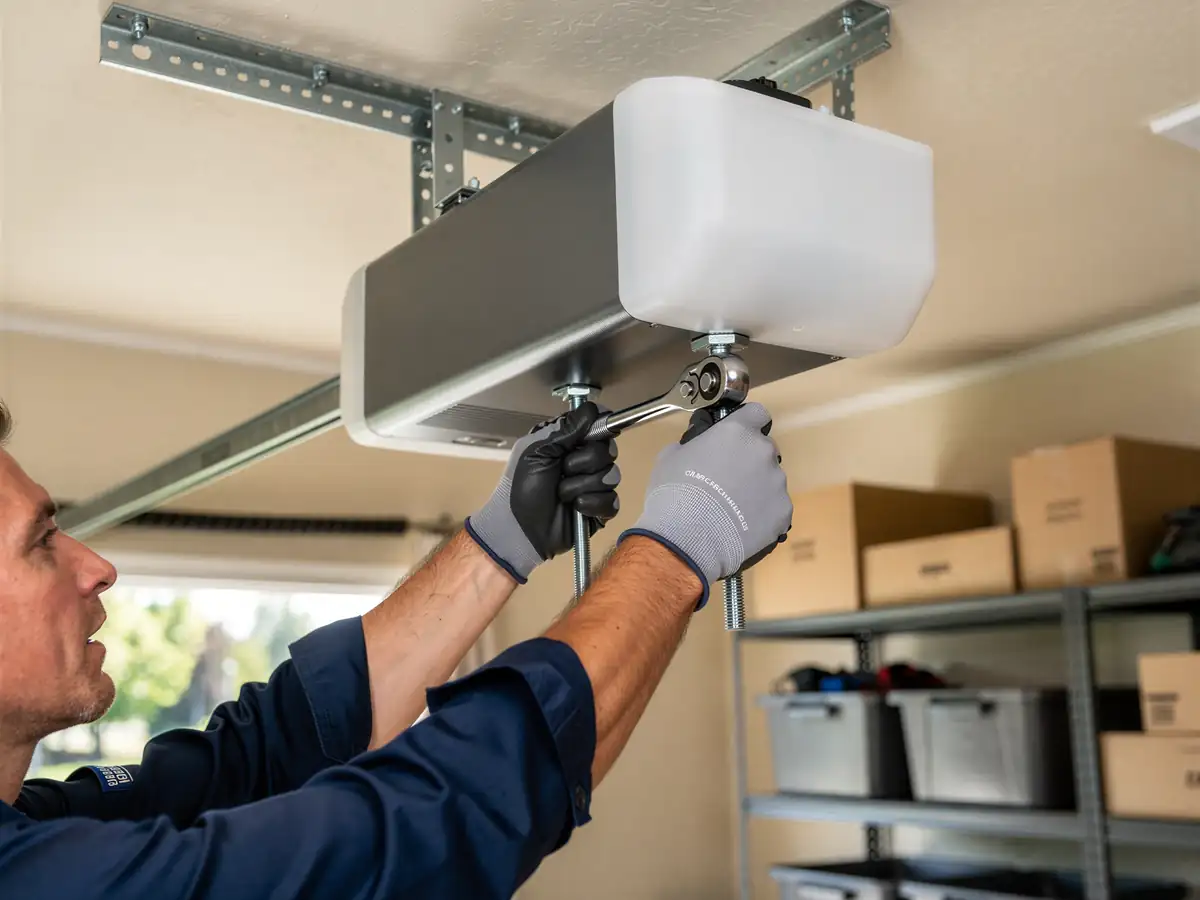
If the bracket points from a 1959-era install don't line up with what the new unit needs, we add an extension rather than force a fit that'll shake loose in a year. We check the outlet next - grounded, dedicated, and rated for the draw - before anything gets wired in.
From there it's a standard install
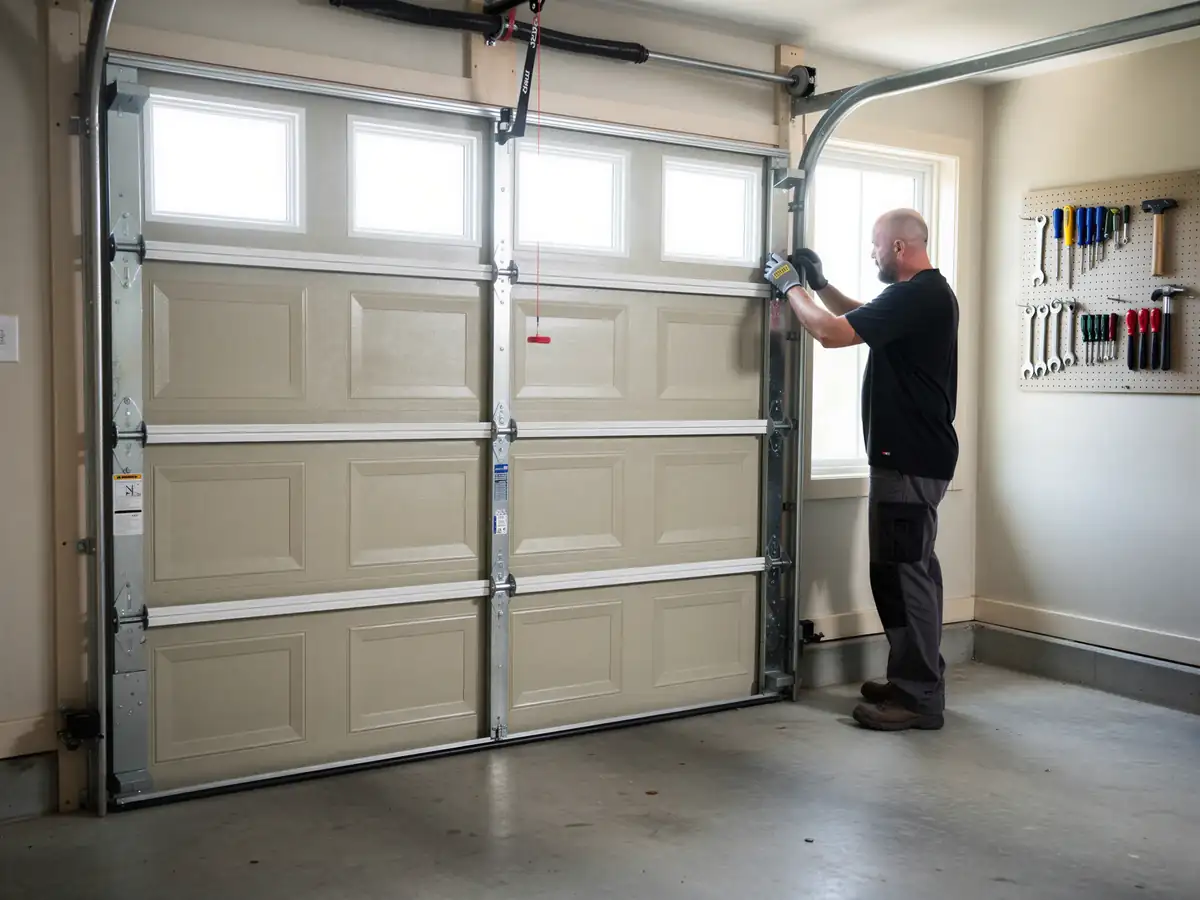
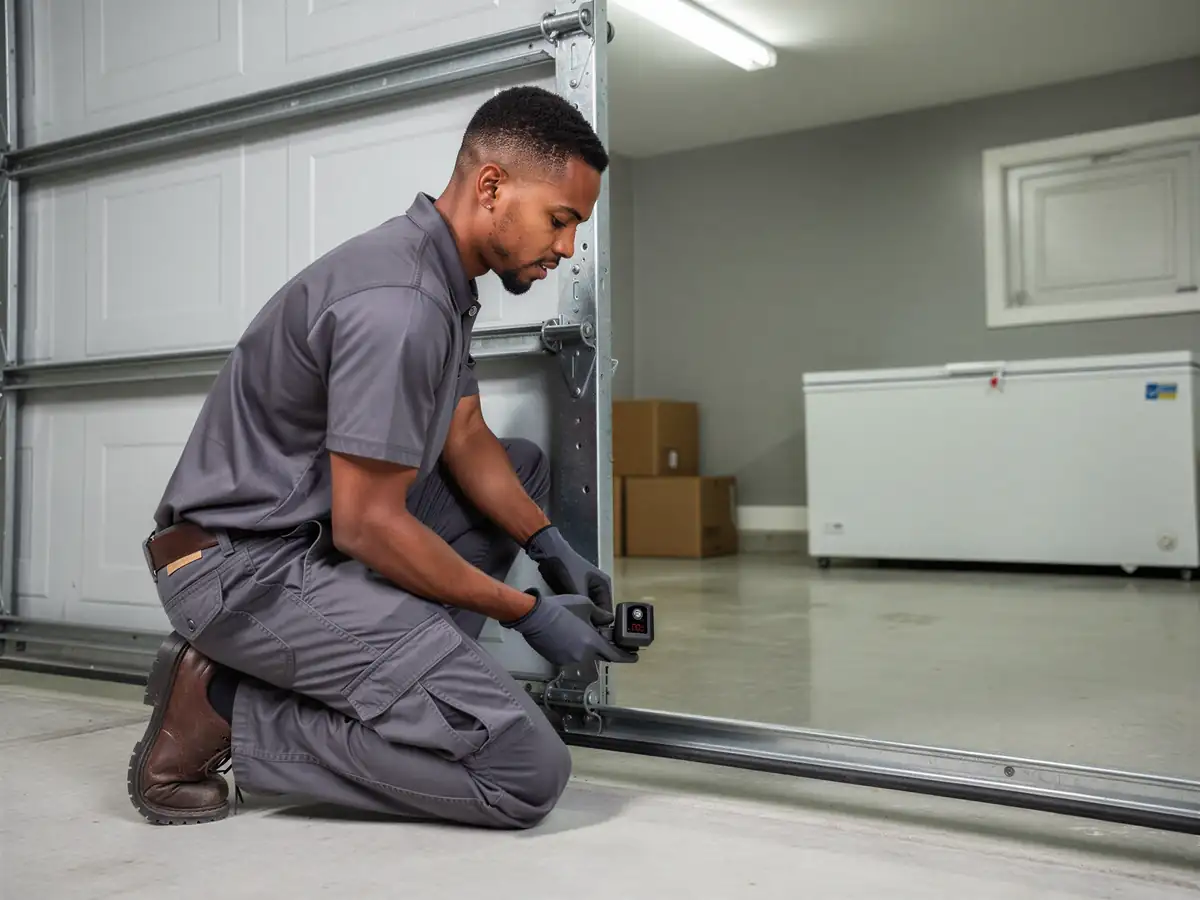
Mount, wire, set the travel limits, confirm the safety sensors cross cleanly at the base of the door, and test the auto-reverse with a two-by-four on the floor, the way the sensors are supposed to catch it. We don't leave a job with the sensors unverified, regardless of how old or new the rest of the door is.